Cat Stomatitis Pain Making Them Refuse Food? How Prednisolone Fast-Tracks Recovery
As a cat parent, nothing is more heartbreaking than watching your pet stare at their food bowl, clearly hungry, only to back away with a painful cry. Chronic feline gingivostomatitis (FCGS) feels like a raging wildfire in a cat’s mouth, and Prednisolone is often the most effective tool to rapidly put out the flame.
If your cat is struggling with severe oral inflammation, understanding how Prednisolone works—and why it is a critical first step—can completely change their healing journey.

Why Prednisolone Over Prednisone for Cats?
A common question pet owners ask is whether they can simply give their cat generic Prednisone formulated for humans or dogs.
The short answer is no. While humans and dogs have liver enzymes that easily convert Prednisone into its active form, Prednisolone, cats lack the specific hepatic enzymes required to make this conversion efficiently. If you give a cat generic Prednisone, their system absorbs very little of it, while putting unnecessary metabolic strain on their liver.
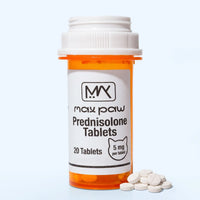
The Prednisolone Tablets from MaxPaw deliver the pure, pre-converted active form directly to your cat. This ensures maximum bioavailability, faster pain relief, and zero unnecessary strain on the liver.

The Core Benefits of Prednisolone in Stomatitis Management
Prednisolone is not a permanent cure for stomatitis, but it serves as an irreplaceable short-term treatment for three major reasons:
1. Fast Pain Relief
Severe oral inflammation causes sharp, blade-like pain. Prednisolone halts this inflammatory cascade at the molecular level. Within 12 to 24 hours, heavy drooling drops sharply, and cats can comfortably return to their food bowls.
2. A Temporary Mucosal Shield
Deep-acting antiviral protocols or long-term tissue-repair regimens typically take several days to build up effective concentrations. A short-term course serves as a vital placeholder, calming the storm so long-term treatment can seamlessly take over.
3. High Bioavailability
Because this formula bypasses liver conversion entirely, a strategic, short-term window maximizes immediate relief without toxic accumulation or long-term steroidal dependency.
The Standard Feline Stomatitis Recovery Regimen
To transition your cat from acute pain to permanent remission, a two-phase approach is highly recommended:
Phase 1 (Days 1 to 7): Quick Relief Kickstart
Administer Prednisolone Tablets alongside a root-cause treatment like StomaHeal Antiviral Therapy during the first week. This combination steps in fast to knock out severe swelling, melt away sharp oral pain, and get your cat eating happily again within 24 hours.
Phase 2 (Ongoing): Deep Healing and Maintenance
Gradually taper off the steroid while continuing with targeted antiviral therapy to clear out underlying viral roots, such as Feline Calicivirus, and allow the oral lining to permanently rebuild. For exceptionally stubborn cases, veterinarians may safely drop Prednisolone down to a tiny, alternate-day maintenance dose.
Essential Care Tips for Pet Parents
Never Stop the Medication Abruptly: If your cat has been on Prednisolone for longer than 7 to 10 days, never stop the treatment cold turkey. Your cat’s adrenal glands need time to safely resume natural hormone production. Always follow a strict tapering schedule over one to two weeks under professional guidance.
Provide a Friction-Free Diet: While medications fight the internal inflammation, you must protect the healing sores physically. Switch your cat to ultra-smooth, silky purees or meat pastes. Avoiding hard kibble or chunky wet food prevents food particles from scraping against active ulcers.
Expect More Frequent Trips to the Water Bowl: Increased thirst and frequent urination are completely normal, temporary side effects of corticosteroids shifting fluid balance. Ensure an unlimited supply of fresh, clean water is always available.
Frequently Asked Questions
No. Prednisolone is a powerful anti-inflammatory therapy designed to knock out acute swelling, manage extreme oral pain, and restore your cat's appetite. Permanent remission requires addressing the root causes, such as viral activity like Calicivirus, often by pairing it with targeted antiviral therapies like StomaHeal.
Dosing should always be verified by a veterinary professional based on your cat's specific health profile. However, the simplified standard guideline based on weight is:
• Cats under 10 lbs: 1/2 tablet (2.5 mg) once daily.
• Cats 10 lbs and over: 1 tablet (5 mg) once daily.
Not with proper management. A short-term, 7-day kickstart focuses entirely on giving your cat immediate, much-needed relief so they can resume eating. Pairing Prednisolone early with a root-cause solution ensures your cat can taper off smoothly without facing painful rebound flare-ups.
Yes. It is routinely used before surgery to control severe inflammation and pain, ensuring cats stay strong, well-nourished, and stable enough for anesthesia. Your vet will usually advise tapering down right before the procedure.
Yes. It is highly common to pair Prednisolone with broad-spectrum antibiotics, such as Clindamycin or Amoxicillin/Clavulanate, to clear up secondary bacterial infections. The only strict rule is never pair corticosteroids with NSAIDs, as this combination can cause severe gastrointestinal ulceration.
If used at high doses for consecutive months, steroids can lead to risks like insulin resistance, which can trigger feline diabetes, muscle wasting, skin thinning, or a suppressed immune system. This is why a brief 7-day window is preferred.
Staying on high-dose steroids long-term can suppress the immune system and allow the virus to replicate further. However, during an acute flare-up, a strategic, short-term course steps in to calm the swelling and pain without causing viral proliferation, provided it is quickly paired with a targeted antiviral.
Increased thirst and frequent urination are the most common temporary side effects of steroids as they alter the body's fluid and electrolyte balance. It is completely expected and fully safe. The behavior will naturally resolve once the medication dose is discontinued.