Understanding Feline Infectious Peritonitis (FIP)
Feline Infectious Peritonitis (FIP) is a serious and often fatal disease in cats. For many pet parents, an FIP diagnosis feels sudden, confusing, and overwhelming. However, FIP is not caused by poor care or external exposure—it is the result of a complex viral mutation that occurs inside a cat’s body.
For pet parents in urgent situations requiring immediate treatment:
Urgent Local Pickup Service
Immediate local pickup options to ensure your cat starts treatment without delay.
FIP Originates From a Common Feline Coronavirus
FIP develops from a widespread virus known as Feline Enteric Coronavirus (FECV).
- FECV is extremely common among cats
- Most infected cats show no symptoms or mild digestive upset
- In a small percentage of cats, FECV mutates into the virus that causes FIP
- FIP is not directly contagious. It develops when the virus mutates within an individual cat.

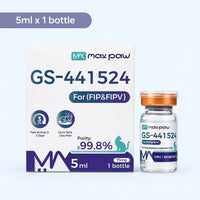
FIP Treatment Injection
High-purity injectable solution for precise dosing and rapid absorption.
FIP Is Not Related to COVID-19
To clarify an important misconception: FIP is not associated with SARS-CoV-2 (COVID-19); it cannot be transmitted from cats to humans; and harsh disinfectants are unnecessary and potentially harmful. This virus affects cats only and poses no risk to people.
Why Does FECV Mutate Into FIP?
The mutation process is highly complex and still under investigation. Current research suggests it involves:
Viral Factors
- Structural changes in the spike (S) protein
- Truncation or loss of the 3c gene
- Increased affinity for immune cells
Immune Response Factors
- Ineffective cell-mediated immunity
- Partial or abnormal immune activation
- Excessive inflammatory responses

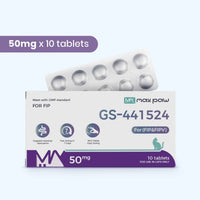
FIP Oral Tablet (50mg)
Effective daily treatment and maintenance for larger cats.
Which Cats Are Most at Risk?
Any cat exposed to feline coronavirus can develop FIP. Studies indicate up to 10% of coronavirus-positive cats may progress to FIP. Over 50% of household cats and up to 90% of cats in shelters have been exposed to FECV.
Common Risk Factors: Multi-cat environments, chronic stress, poor sanitation, young age, or co-infections such as Feline Leukemia Virus (FeLV) or Feline Immunodeficiency Virus (FIV).
For precise dosing tailored to kittens and smaller patients:
FIP Oral Tablet (15mg)
Accurate dosing for smaller cats and kittens during recovery.
Breeds and Environment
Are Certain Breeds More Susceptible? Yes. Research suggests that some purebred cats—including Himalayan, Bengal, and certain Ragdoll lines—may have a higher genetic susceptibility.
Does the Virus Survive in the Environment? Fortunately, feline coronavirus does not persist well outside the host. Standard disinfectants are effective, and it does not threaten human health.
If You Suspect Your Cat May Have FIP
Early symptoms of FIP can be subtle and nonspecific, including lethargy, appetite loss, weight loss, persistent fever, or abdominal fluid accumulation. If you’re unsure whether your cat may have FIP, or if you urgently need guidance or access to treatment,
MaxPaw is here for you—whenever you need support.
MaxPaw is the only U.S.-based FIP service offering 24/7 online support, providing pet parents with reliable, compassionate guidance during one of the most stressful times. Our team is available around the clock to help with:

If you have any questions at all, you can reach our official team where real people—not automated responses—are ready to help you now.
You are not alone. MaxPaw stands with you and your cat—every step of the way.