The High-Concentration Trap: Why More Isn’t Better in FIP Treatment
Navigating a Feline Infectious Peritonitis (FIP) diagnosis is emotionally, physically, and financially exhausting. Between administering daily subcutaneous injections to a struggling cat and managing the anxiety of an 84-day protocol, caregivers naturally search for ways to streamline treatment, minimize physical distress, and optimize financial outcomes.
In caregiver support networks and online communities, high-concentration GS-441524 injectable formulations have gained significant popularity. This strong community buy-in is driven by several compelling assumptions:
- The Promise of Better Efficacy & Relapse Prevention: Many caregivers naturally believe that a higher drug concentration acts as a "stronger, more potent dose" that can aggressively eradicate the virus, speed up clinical recovery, and permanently prevent dreaded relapses.
- Reducing Injection Trauma: Watching a cat cry or struggle during daily injections is heartbreaking. High-concentration formulas promise a smaller fluid volume per dose (mL), leading owners to assume the injection will be less painful and physically traumatic.
- Perceived Cost Savings: Purchasing a vial with a higher milligram-per-milliliter ratio for a price similar to standard formulas creates the impression of getting more active medication for less money.

While these motivations stem from a place of genuine love and practical necessity, pharmacological and clinical evidence demonstrates that "higher concentration" does not equal "better care." In reality, escalating GS-441524 concentration compromises systemic drug absorption, increases toxicity risks, and elevates the likelihood of treatment failure.
1. Pharmacokinetics: Milligrams, Plasma Peaks, and Hepatotoxicity
A fundamental misconception in home-administered FIP care is confusing fluid injection volume (mL) with active drug mass (mg). Your cat’s metabolic organs—primarily the liver and kidneys—process active drug molecules, not the inert solvent carrying them.
To understand the physiological impact, consider pharmacokinetic dynamics: when a high-concentration formula is injected, it causes a sharp, erratic spike in peak plasma concentration (Cmax). Rather than allowing smooth systemic distribution, this sudden influx overloads hepatic metabolic pathways.
Consider an oral alcohol analogy: consuming a single concentrated shot of a 96% spirit introduces a violent, instantaneous surge of ethanol into the bloodstream, causing severe acute stress to gastric mucosa and liver enzymes. Conversely, consuming equivalent alcohol units via lower-proof, diluted beverages allows the body to metabolize the compound gradually over time.
In cats suffering from FIP, systemic inflammation already compromises hepatic and renal function[1]. Subjecting fragile liver tissue to steep Cmax spikes significantly elevates the risk of drug-induced liver injury (DILI) and acute liver enzyme elevation (ALT/AST), frequently necessitating secondary clinical intervention.
2. The Relapse Fallacy: Why High Concentration Undermines Viral Suppression
A persistent rumor suggests that high-concentration solutions deliver a "lethal blow" to feline coronavirus (FCoV) pockets, thereby preventing relapse. Pharmacologically, antiviral efficacy against RNA viruses like FCoV depends on sustained therapeutic drug exposure over time—measured as Area Under the Curve (AUC) relative to the Minimum Inhibitory Concentration (MIC)—rather than extreme, transient plasma spikes.
The Danger of Volatile Blood Concentration
High-concentration formulations often exhibit unpredictable absorption kinetics. A rapid peak is frequently followed by a steep decline in blood concentration. If plasma drug levels drop below the MIC before the next 24-hour dose, remaining viral particles regain the ability to replicate, increasing the risk of drug resistance mutations and treatment relapse.
Treatment Interruption: The Leading Cause of Relapse
In clinical practice, the vast majority of FIP relapses are not caused by insufficient drug potency, but by unintended protocol interruptions. High-concentration injections commonly cause severe subcutaneous lesions or organ stress, forcing owners to temporarily halt treatment, lower doses, or skip days. These forced pauses create optimal conditions for viral rebound.
3. Subcutaneous Tissue Dynamics: Acidity, Burning, and Skin Necrosis
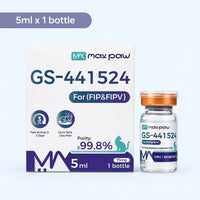
The raw chemical structure of GS-441524 is weakly basic and inherently difficult to solubilize in neutral aqueous solutions. To dissolve higher amounts of raw powder per milliliter, manufacturers must resort to extremely harsh formulation chemistry:
- Hyper-Acidic Carriers: Achieving high drug solubility requires lowering solution pH to extreme acidic levels (often between pH 1.5 and 1.9).
- Hypertonicity: High solute density creates an osmotically imbalanced fluid that pulls water out of surrounding subcutaneous cells upon injection.
When hyper-acidic, hypertonic fluid is injected subcutaneously, it causes intense chemical burning and acute localized vasoconstriction. Instead of absorbing smoothly, the fluid lingers in the subcutaneous pocket, triggering severe tissue irritation, sterile abscesses, and deep vascular necrosis.

Furthermore, localized microvascular damage impairs subcutaneous blood flow at the injection site. Paradoxically, this localized damage **reduces systemic drug absorption**, meaning a smaller percentage of the active drug reaches the cat's bloodstream compared to a standard-concentration formulation.
4. The False Economy: Hidden Costs of Secondary Complications
Evaluating medication cost purely on a "price per vial" basis ignores the substantial financial risks associated with adverse drug reactions. While buying a high-concentration vial may appear to lower daily medication costs, treating secondary tissue or organ damage dramatically exceeds those theoretical savings.
Common financial consequences of high-concentration adverse effects include:
- Surgical Debridement & Wound Care: Treating severe open necrotic sores requires veterinary sedation, surgical flushing, topical dressings, and daily bandaging over several weeks.
- Secondary Infection Management: Open skin lesions frequently develop secondary bacterial infections, requiring culture tests and course-long broad-spectrum systemic antibiotics.
- Emergency Hepatic Support: Managing acute liver enzyme spikes involves prescription hepatoprotective supplements, emergency diagnostic bloodwork, and supportive IV fluid therapy.
When factoring in these emergency veterinary expenses, high-concentration formulations regularly prove to be significantly more expensive over the full 84-day treatment lifecycle.
5. Clinical Consensus: Why 15–20 mg/mL Is the Gold Standard
Extensive clinical research, originating from landmark studies led by Dr. Niels C. Pedersen at UC Davis, established 15–20 mg/mL as the optimal therapeutic concentration range for subcutaneous GS-441524[1].
This standard concentration provides a carefully calibrated balance:
- Smooth Pharmacokinetic Release: Allows gradual, continuous absorption into systemic circulation, maintaining steady plasma levels above MIC without triggering hepatotoxic spikes.
- Biocompatible pH Tolerance: Minimizes subcutaneous stinging and tissue damage, preserving skin integrity over 12 consecutive weeks of daily injections.
- Potency Stability: Accommodates minor physical degradation over time, guaranteeing that every administered dose delivers reliable, therapeutic antiviral activity[2].
A Safer Strategy for Injection Fatigue
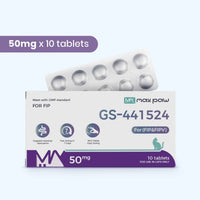
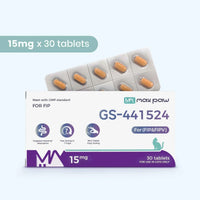
If a cat develops severe injection resistance, scar tissue accumulation, or skin sensitivity during a 12-week course, escalating drug concentration is the wrong solution. The clinically sound approach is to evaluate transitioning from injectable solution to oral GS-441524 tablets or capsules[2].
Once gastrointestinal inflammation subsides and appetite normalizes, high-quality oral formulations offer stable systemic absorption without skin irritation or acute injection distress. Consulting a qualified veterinarian or knowledgeable FIP advisor ensures a smooth, safe transition that protects both organ function and quality of life.