Understanding Ocular FIP: Key Symptoms, Diagnostic Steps, and Treatment Options

Few diagnoses cause as much panic for a cat parent as Feline Infectious Peritonitis (FIP). Historically considered a 100% fatal systemic illness, FIP is caused by a mutated form of the common Feline Coronavirus (FCoV). While FCoV is ubiquitous—infecting up to 80% to 90% of cats in multi-cat environments—it usually causes only mild, self-limiting digestive issues. However, in about 5% to 10% of infected cats, the virus undergoes a random internal mutation. This allows it to invade white blood cells, spread throughout the body, and trigger severe, immune-mediated systemic inflammation.
One of the most distinct and critical forms of this disease is ocular FIP—a non-effusive (dry) manifestation where mutated viral particles cross into the eye tissues. Left untreated, ocular FIP leads to severe intraocular inflammation, pain, and eventual blindness. Fortunately, with modern antiviral breakthroughs, FIP is no longer an automatic death sentence and is now a fully curable condition.
What Is Ocular FIP and How Does It Develop?
Ocular FIP occurs when virus-laden macrophages penetrate the blood-ocular barrier, targeting the structures of the uveal tract (including the iris, ciliary body, and choroid). This process triggers localized, nodular inflammatory lesions (granulomas) and intense intraocular vasculitis.
Although ocular FIP can develop as an isolated manifestation, it frequently occurs alongside neurological symptoms or internal organ involvement. It is most commonly diagnosed in kittens and young cats under two years of age, or in senior cats experiencing a decline in cell-mediated immunity.
Common Symptoms of Ocular FIP

Early recognition of ocular symptoms is the most vital factor in saving a cat's eyesight. Key clinical signs include:
- Anterior Uveitis: Severe inflammation of the front chamber of the eye (iris and ciliary body), causing the eye to look hazy, cloudy, or noticeably reddish.
- Iris Discoloration: Sudden changes in the color of the iris, abnormal darkening, or asymmetrical coloration between the eyes.
- Aqueous Flare: Light scattering inside the anterior chamber caused by protein and inflammatory cells leaking into the fluid.
- Keratic Precipitates (KPs): Tiny, whitish-mutton-fat clumps of inflammatory cell aggregates adhering to the inner layer of the cornea.
- Pupillary Changes (Miosis / Anisocoria): Constricted pupils (miosis) caused by muscle spasms and pain, or unequal pupil sizes (anisocoria).
- Hyphema & Intraocular Bleeding: Accumulation of blood within the anterior chamber due to damaged blood vessels.
- Vision Impairment & Blindness: Reduced menace response, clumsiness, bumping into walls, or complete loss of sight.
- Retinal Detachment or Hemorrhages: In advanced stages, fundic examination reveals internal retinal bleeding or full retinal detachment.
How Is Ocular FIP Diagnosed?

Diagnosing ocular FIP requires meticulous veterinary investigation, as no single blood test offers a 100% definitive result. Veterinarians rely on a combination of tests and clinical markers:
- Ophthalmic & Slit-Lamp Examination: Detailed evaluation using indirect ophthalmoscopy and slit-lamp biomicroscopy to detect keratic precipitates and aqueous flare.
- Tonometry & Ocular Ultrasound: Measures intraocular pressure (IOP), which is typically abnormally low in cases of active uveitis, and visualizes deep eye structures.
- Blood Chemistry Profile (A/G Ratio): FIP causes total serum protein and globulin levels to skyrocket due to excessive antibody production, while albumin levels drop. An Albumin-to-Globulin (A/G) ratio below 0.6 strongly suggests FIP, while a ratio below 0.4 carries an extremely high predictive accuracy.
- Complete Blood Count (CBC): Frequently shows lymphopenia (low lymphocyte count) and non-regenerative anemia caused by chronic systemic inflammation.
- RT-PCR Testing: Reverse-transcriptase PCR performed on aqueous humor fluid aspirate can detect FCoV RNA to help confirm viral presence.
Modern Antiviral Treatment: The GS-441524 Protocol
The treatment paradigm for FIP was revolutionized by GS-441524—a small-molecule nucleoside analog that acts as a targeted inhibitor of viral RNA-dependent RNA polymerase. By stopping viral RNA replication instantly, it allows the host immune system to clear the virus and repair damaged tissues.
Formulations & Administration
GS-441524 is available in two primary forms to suit the cat's medical state and owner preference:
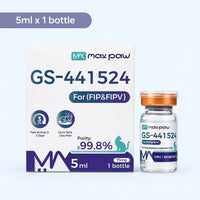
- Injectable GS-441524: Administered daily via subcutaneous injections. Ideal for early-stage cases, cats experiencing severe gastrointestinal distress, or those with malabsorption issues.
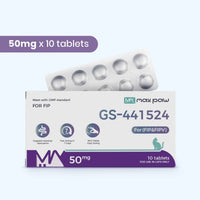
- Oral Tablets / Capsules: Convenient daily oral medication. Preferred once the cat stabilizes, recovers its appetite, and displays normal digestion.
Dosing Considerations for Ocular Cases
Because antiviral molecules must successfully cross the tight blood-ocular barrier to penetrate eye tissues, ocular FIP requires a higher dosage tier compared to standard wet (effusive) FIP:
- Standard Wet FIP Baseline: 5 – 6 mg/kg daily.
- Ocular FIP Tier: 8 – 10 mg/kg daily (or higher if neurological signs co-exist).
The Standard 84-Day Protocol
- 84 Days of Active Treatment (12 Weeks): Continuous daily dosing of GS-441524 given strictly every 24 hours without skipping doses.
- 84 Days of Observation (12 Weeks): Once blood markers normalize and clinical symptoms resolve, medication is stopped. The cat enters an 84-day observation period, after which it is officially considered cured.
Essential Ophthalmic Care & Supportive Nursing
While GS-441524 halts the underlying virus, targeted local treatment and supportive care protect the eye structures during the initial healing phase:
- Mydriatic Eye Drops (Atropine): Dilates the pupil to relieve painful ciliary muscle spasms and prevent structural adhesions inside the eye.
- Topical Antibiotics: Protects against secondary corneal ulcers or opportunistic bacterial infections.
- Hepatoprotective Supplements: Administering liver support supplements (such as SAMe or Milk Thistle) helps process metabolic waste during rapid recovery.
- Nutritional Support: High-calorie recovery diets or feeding assistance ensure adequate calorie intake for tissue repair.
Prognosis and Long-Term Recovery

With prompt diagnosis, appropriate higher-tier dosing of GS-441524, and proper local eye management, the prognosis for ocular FIP is remarkably positive. Most cats show clear ocular improvement—such as reduced cloudiness and improved pupil responsiveness—within the first 1 to 2 weeks of antiviral therapy. With full adherence to the 84-day protocol, the majority of cats achieve complete, permanent remission and successfully retain or regain their sight.