Feline oral inflammatory disease – common clinical findings, diagnostic pathways and therapy
Is Your Cat Refusing Food? The Cellular Science Behind Refractory Feline Stomatitis (FCGS)
Managing a feline patient diagnosed with Feline Chronic Gingivostomatitis (FCGS) is a profoundly challenging and exhausting experience for any caretaker. Watching your companion hesitate before their food bowl, visibly trembling, vocalizing, or pawing frantically at their muzzle due to severe, unrelenting chronic oral pain, brings an overwhelming sense of helplessness. For many owners, the endless cycle of temporary antibiotic fixes, aggressive systemic corticosteroid regimens, and repetitive veterinary visits leads to severe caregiver burnout. You are not alone in seeking a more sustainable, long-term therapeutic strategy. At MaxPaw, we believe that managing destructive feline stomatitis must move past short-term palliative relief and focus entirely on true cellular recovery.

The Underlying Pathology: Why Traditional Therapies Fail
According to global veterinary consensus, feline chronic gingivostomatitis FCGS is not a simple localized infection; it is a severe, chronic, immune-mediated mucosal disease characterized by a T-cell-mediated hyper-responsiveness to chronic antigenic stimulation. This destructive cellular reaction is heavily potentiated and exacerbated by underlying viral loads, most notably Feline Calicivirus (FCV) and Feline Herpesvirus (FHV-1). Rather than executing a balanced mucosal defense, the cat's hyper-reactive immune system loses regulatory control, actively flooding the subepithelial stroma with massive clusters of plasma cells and abnormal Mott cells.

Diagnostic Triad: Symptoms of Advanced Mucosal Destruction
Unlike marginal gingivitis, inflammation in FCGS crosses the mucogingival junction, aggressively invading the caudal oral cavity, lateral palatoglossal folds, fauces, and alveolar mucosa. Clinicians observe intensely erythematous, ulcerative, and proliferative "cobblestone-like" mucosal tissue masses that bleed spontaneously upon the slightest palpation.
Affected felines suffer from a painful, agonizing inability to swallow or chew food particles. A classic behavioral presentation involves a cat approaching their food bowl with clear hunger, taking a single bite of wet or dry food, and instantly hissing, growling, or pawing frantically at their mouth before backing away in terror. This intense mechanical mastication pain directly causes complete food avoidance and acute anorexia.
The continuous oral inflammation triggers chronic ptyalism, presenting as thick, viscous, often blood-tinged drooling that stains the cat’s muzzle and chest. Because oral movement is excruciating, cats completely cease self-grooming, resulting in a matte, unkempt coat, severe fetid halitosis, and a rapid drop in their body condition score due to nutritional deprivation.
The Extraction Dilemma: Is Full-Mouth Surgery the Only Option?
When presented with advanced feline stomatitis, the standard veterinary recommendation is frequently partial or full-mouth alveolar tooth extraction. The therapeutic logic behind surgery is to permanently eliminate the hard tooth surfaces that harbor chronic bacterial plaque antigens, thereby reducing the localized immune stimulus. Clinical statistics reveal that while full-mouth extractions provide a cure or significant clinical improvement for approximately 70% to 80% of patients, the remaining 20% to 30% of cases are classified as refractory feline stomatitis.
For these refractory cases, severe, painful, ulcerative mucosal inflammation persists in the caudal oral cavity long after every single tooth has been surgically removed. Furthermore, many senior felines or cats with concurrent organ deficiencies cannot safely tolerate the extensive anesthesia required for such multi-hour oral surgeries. For these vulnerable populations and for post-extraction refractory patients, a non-invasive, multi-target feline chronic gingivostomatitis treatment focused directly on cellular immune modulation is an absolute medical necessity.

MaxPaw Targeted Bio-Defense
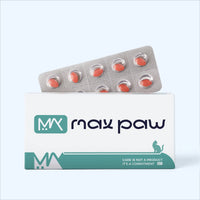
Rather than temporarily masking pain signals or relying on systemic steroids that cause cumulative organ strain, MaxPaw Feline Stomatitis Target Formula is a novel, dedicated therapeutic agent engineered specifically to address the complex pathogenesis of Feline Chronic Gingivostomatitis (FCGS). Bypassing traditional non-specific treatments, this localized molecular innovation intervenes directly at the cytological level to modulate the overactive immune response and accelerate mucosal tissue remodeling.
This specialized formulation achieves stable clinical remission through four targeted biological pathways:
MaxPaw precisely down-regulates the overproduction of specific pro-inflammatory cytokines, explicitly targeting Tumor Necrosis Factor-alpha (TNF-α) and Interleukin-1 beta (IL-1β). By stabilizing these inflammatory drivers, it actively stops the autologous immune system from treating the oral mucosa as a hostile pathogen, avoiding global systemic immunosuppression.
Our formula provides essential structural bio-precursors necessary for the accelerated proliferation of oral epithelial cells. This tissue remodeling actively rebuilds the compromised mucosal barrier, restoring the biological shield to insulate raw, exposed nerve endings from mechanical friction and opportunistic oral microflora, thereby neutralizing mealtime pain.
MaxPaw modulates the hyper-reactive subgingival and oral microbiome. By actively suppressing opportunistic bacterial spikes and inhibiting viral replication dynamics (such as FCV and FHV-1), it balances the oral ecosystem and lowers the continuous antigenic load on the host immune response.
Administering large, hard pills to a cat with bleeding caudal lesions causes extreme oral trauma. MaxPaw features an ultra-small tablet design that can be seamlessly dissolved or easily hidden within soft foods, providing a completely stress-free delivery system that safeguards fragile mucosal linings from secondary injury.
Secure the MaxPaw Rescue Kit today to restore cellular homeostasis and give your cat the pain-free life they deserve.
The Clinical Timeline & Holistic Protocols
To successfully guide a cat into long-term, stable clinical remission, caregivers must look at recovery through a structured multi-stage timeline paired with optimized management strategies:
- Days 1 - 7 (Acute Phase): Reduction in localized vascular congestion and capillary permeability. Viscous drooling and severe fetid halitosis begin to clear. Clinical inflammatory discomfort scores drop sharply from an acute 85% to a manageable 45% as nerve pathways are insulated.
- Weeks 1 - 3 (Tissue Remodeling Phase): Inflammatory scores decline to below 15% as deep cellular repair of the ulcerated caudal tissues progresses, successfully guiding the patient into long-term, stable clinical remission.
- Hepatic & Enteric Rejuvenation: Because FCGS patients are frequently subjected to intensive pharmacological protocols, combining your therapy with a specialized liver supplement is essential to clear accumulated chemical residues from prior steroid treatments, alongside FIPPRO BIOTICS+ to repair the mucosal lining of the gut damaged by chronic antibiotic courses.
- Clinical Feeding Strategies: Puree premium pâté-style diets with warm water to a completely liquid consistency. Heating the food precisely to a cat's baseline body temperature maximizes volatile aromatic compounds, stimulating the olfactory senses to encourage voluntary nutritional intake without triggering mechanical mastication pain.
Clinical Reference: Frequently Asked Questions
Can feline chronic gingivostomatitis (FCGS) heal on its own without antibiotics? +
No, feline chronic gingivostomatitis FCGS is a progressive, immune-mediated disease that will never self-resolve. Antibiotics only eliminate temporary surface bacteria; because the true underlying pathology involves a T-cell-mediated host immune overreaction, the painful oral inflammation will continuously worsen without targeted cellular immunomodulatory therapy.
What makes MaxPaw different from other systemic treatments for refractory FCGS cases? +
Unlike generic palliative care or broad-spectrum anti-viral adaptations, MaxPaw is a dedicated, newly developed therapeutic agent formulated exclusively for feline chronic gingivostomatitis (FCGS). Traditional steroid therapies carry severe organ toxicities and only mask symptoms. MaxPaw delivers a targeted molecular approach that down-regulates specific pro-inflammatory cytokines (TNF-α and IL-1β) directly within the oral mucosa, addressing the cellular root cause to safely guide post-extraction refractory cats into stable clinical remission without relying on FIP-related anti-viral compounds.
How long can a cat live with feline stomatitis? +
Feline stomatitis itself is not a direct terminal disease, meaning affected felines can maintain a normal operational lifespan if their severe pain and systemic caloric intake are properly managed. However, if left completely untreated, the resulting dynamic feeding terror leads to rapid severe weight loss, life-threatening hepatic lipidosis, and progressive organ failure. Intervening with cellular recovery therapies like MaxPaw actively insulates raw oral mucosal linings, preserving vital self-feeding behaviors and baseline longevity.
Why does a cat with caudal stomatitis hiss or growl during meals? +
Cats showing signs of caudal stomatitis have proliferative, cobblestone-like inflammatory lesions clustered in the fauces and palatoglossal folds. When they attempt to swallow, mechanical food friction rubs directly against these highly vascularized, exposed nerve pathways, causing an agonizing spike in localized pain that triggers fear and immediate dry food refusal.
Is full-mouth alveolar extraction the only cure for feline chronic gingivostomatitis symptoms? +
No, surgery is not globally curative. While full-mouth extraction is the standard recommendation to reduce bacterial antigens on plaque, veterinary statistics indicate that roughly 20% to 30% of felines are classified as refractory post-surgery. These cats continue to exhibit aggressive, ulcerative mucosa without teeth, meaning non-surgical cellular therapies remain essential.
Is feline chronic gingivostomatitis contagious to other cats? +
FCGS itself as an immune-mediated condition is not contagious and cannot be passed directly between animals. However, the underlying underlying viral triggers that deeply complicate and drive the chronic antigenic response—predominantly Feline Calicivirus (FCV) and Feline Herpesvirus (FHV-1)—are highly contagious via shared saliva, grooming, and food bowls. While multi-cat households must manage these viral sheds, addressing the host's specific overactive immune response locally via MaxPaw's biological pathways remains key to resolving active lesions.
How do viral infections complicate a complex diagnostic pathways setup? +
Viral pathogens like FCV and FHV-1 cause continuous chronic antigenic stimulation that triggers the host immune response. In a complex diagnostic workup, these viruses mask internal organ pathologies by amplifying severe localized mucosal tissue erosion, requiring comprehensive diagnostic pathways (such as histological examination and PCR swabs) to rule out overlapping conditions.
Why should long-term systemic corticosteroids be avoided in feline chronic gingivostomatitis treatment? +
Continuous corticosteroid therapy suppresses global bone marrow activity and disrupts core endocrine stability, frequently inducing irreversible secondary pathologies like steroid-induced diabetes mellitus, systemic hypertension, and latent viral reactivation. MaxPaw bypasses these risks by utilizing safe molecular bio-defense mechanics focused solely on cellular mucosal homeostatic regulation.